Premium silicon nitride for ceramics, refractories, and electronics. Exceptional quality, reliable supply, and competitive rates.

Title: Why Silicon Nitride Ceramics Rule High-Temperature Vacuum Viewports
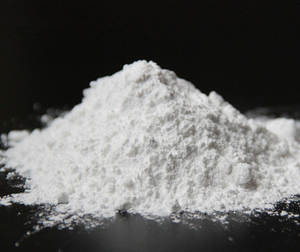
(The Performance Advantages Of Silicon Nitride Ceramics In The Manufacture Of High-Temperature Vacuum Observation Windows Are Obvious)
Blog:
Ever peeked inside a furnace while it’s running? Probably not. Seeing what’s happening inside super-hot chambers under vacuum is tough. Regular glass just melts or cracks. That’s where special materials come in. Silicon Nitride Ceramics are stepping up to the plate. They are becoming the go-to choice for High-Temperature Vacuum Observation Windows. Why? They handle the heat and the pressure drop like champs. Let’s dive into why this material is such a game-changer.
1. What are Silicon Nitride Ceramics?
Think of Silicon Nitride as a superhero material for extreme environments. It’s not like regular pottery. It’s a super-strong, engineered ceramic. Scientists create it by bonding silicon and nitrogen atoms under intense heat and pressure. This process gives it amazing properties.
This stuff is incredibly hard. It resists scratches and wear much better than many metals. It doesn’t bend easily; it stays rigid under heavy loads. Crucially, it laughs in the face of high temperatures. Silicon Nitride keeps its strength even when things get scorching hot. It doesn’t expand too much with heat either. This dimensional stability is vital for precision parts like windows.
It’s also chemically very stable. Most acids and alkalis barely bother it. This toughness makes it perfect for harsh industrial settings. It’s more than just a brick; it’s a high-performance engineering material.
2. Why Use Them for High-Temperature Vacuum Observation Windows?
High-Temperature Vacuum Observation Windows have a tough job. They sit between the fiery chaos inside a furnace or reactor and the outside world. They need to let light through so cameras or eyes can see in. They must also keep the vacuum sealed tight. No leaks allowed. And they can’t melt, crack, or fog up.
This is where Silicon Nitride shines. Its resistance to thermal shock is top-notch. Imagine taking something from room temperature and plunging it into a furnace. Many materials shatter. Silicon Nitride handles these sudden temperature changes much better. It doesn’t crack under the stress.
It stays strong at high temperatures. While metals might soften, Silicon Nitride keeps its structural integrity. This means the window won’t warp or fail under the heat. It also has low thermal expansion. The window won’t grow or shrink too much with temperature swings. This prevents stress cracks and ensures a tight seal in the window frame.
Its hardness protects it from abrasion. Particles flying around inside the chamber won’t easily scratch the view. Plus, it’s chemically inert. It won’t react with hot gases or molten materials inside. This keeps the view clear over time.
3. How They’re Made for the Job
Making a Silicon Nitride observation window isn’t like molding clay. It requires precision engineering. The process starts with very fine, pure silicon nitride powder. Manufacturers mix this powder with special binders. This mix is then shaped into the desired form, like a disk. This shaping often uses pressing or casting techniques.
Next comes the critical step: sintering. The shaped part, called a “green body,” is heated to extremely high temperatures. This is often done in special furnaces under controlled atmospheres. Sintering makes the powder particles bond together. The material shrinks and becomes dense and strong. No melting happens; it’s solid-state bonding.
Achieving the right density and avoiding flaws is crucial. Even tiny pores or cracks can weaken the window or make it leak. Advanced techniques like hot pressing or gas pressure sintering are often used. These methods help create fully dense, flawless ceramics.
After sintering, the window undergoes precise machining. Diamond tools grind and polish the surfaces. This ensures optical clarity and perfect dimensions for fitting into the window assembly. The final step is rigorous quality testing. They check for strength, leaks, and optical quality.
4. Where They Shine: Real-World Applications
These tough windows are vital in industries where seeing inside hot, empty spaces is essential. Think about semiconductor manufacturing. Furnaces bake silicon wafers at high temperatures under vacuum. Operators need to monitor the process without breaking the vacuum. Silicon Nitride windows make this possible.
In solar cell production, similar high-temperature processes occur. Watching crystal growth or layer deposition relies on a clear view. Silicon Nitride provides that window reliably.
Vacuum heat treatment of metals is another big area. Aerospace parts or high-performance tools are treated in vacuum furnaces. Observing the parts ensures quality control. Silicon Nitride windows withstand the heat and vacuum.
Research labs pushing boundaries also depend on them. Material science experiments, chemical vapor deposition studies, plasma research – all need to see inside hostile environments. Silicon Nitride ceramics offer the necessary viewport.
Even some advanced lighting systems use them. High-intensity discharge lamps can generate intense heat. Silicon Nitride viewports allow light out while containing the hot gases inside.
5. Your Burning Questions Answered
Q: Are these windows completely see-through like glass?
A: Not exactly like window glass. They are translucent. You can see shapes and movement clearly. Perfect light transmission isn’t always the goal. Seeing the process inside is the key. The material offers enough visibility for monitoring.
Q: How hot can they really handle?
A: Silicon Nitride maintains useful strength up to very high temperatures. Think around 1300°C to 1400°C (2372°F to 2552°F) in air. In vacuum or inert atmospheres, it can potentially handle even higher temperatures. This far exceeds the limits of ordinary glass or quartz.
Q: Are they expensive?
A: They cost more than basic materials like standard glass or steel. The complex manufacturing process adds cost. But consider the value. They last longer in harsh conditions. They prevent costly furnace shutdowns for window replacements. They improve process control. For critical applications, the performance justifies the investment.
Q: Can they handle pressure differences too?
A: Absolutely. Their high strength and toughness allow them to withstand significant pressure differentials. This is essential. Vacuum chambers have low pressure inside and atmospheric pressure outside. The window must hold this pressure difference without failing.
Q: How long do they last?

(The Performance Advantages Of Silicon Nitride Ceramics In The Manufacture Of High-Temperature Vacuum Observation Windows Are Obvious)
A: Lifespan depends heavily on the specific operating conditions. How extreme are the temperatures? How frequent are the thermal cycles? What is the chemical environment? Under typical industrial conditions, Silicon Nitride windows offer vastly superior longevity compared to alternatives like fused quartz. They resist thermal shock degradation much better.
RELATED POSTS

UV LED substrate material comparison: Sapphire, Silicon, Aluminum Nitride, Silicon Carbide, Gallium
The Potential Of Silicon Nitride Materials In Electronic Packaging Thermal Conductive Interface Materials Is Gradually Emerging
The Application Prospects Of Silicon Nitride Ceramics In The Preparation Of Precision Instrument Sleeves Are Broad
is silicon nitride hydrophobic
Innovative Application Of Silicon Nitride Powder In The Preparation Of Special Ceramic Fibers