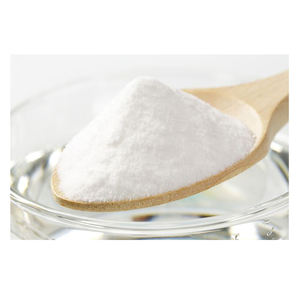
Premium silicon nitride for ceramics, refractories, and electronics. Exceptional quality, reliable supply, and competitive rates.


(An Overview of Zinc Sulfide)
A Brief Overview Zinc Sulfide
Zinc sulfur is an inorganic compound that is employed as a pigment in optical coatings. It is also found in luminescent dials. This article provides a comprehensive overview of the chemistry of Zinc sulfur. This article will provide further information on its use.
Zinc Sulfide is an organic compound
Zinc sulfide can be found in nature in two forms; wurtzite or sphalerite. Wurtzite’s colour is white, and it is greyish white. Its density is 4.09g/mL, and an melting temperature of 1.185degC. Zinc sulfur can be used as a pigment.
Zinc sulfur is insoluble in water, however it decomposes into powerful oxidizing agents and acids in temperatures greater than 600 degC. This process creates zinc fumes. In the presence of ultraviolet light, zinc sulfur luminescent. It also shows phosphorescence.
Zinc sulfide is a pigment
Zinc Sulfide is a natural metal that is a natural element that can be used a pigment. Its composition is mainly composed of sulfur and zinc. It can be used to make a range colours for various uses. It is commonly used in painting and inks.
Zinc as sulfide can be described as a crystalline solid. It is used in various fields like photo-optics and semiconductors. There are various standard grades available, including Mil Spec as well as ACS. Reagent, Technical , and agricultural. The mineral acid is not soluble however, it is water-soluble. The crystals have a large degree of relaxation and can be isotropic.
Zinc sulfur can be utilized for many different purposes, in the same way as it is a good pigment. It’s a perfect option for coatings and for shaped parts made of natural organic polymers. It’s a flameproof pigment and has excellent thermal stability.
Zinc sulfide is used in the luminous dials
Zinc Sulfide was one of the elements which was used to construct luminous dials from the time of the ancients. It’s a substance which emits light when struck with radioactive elements. The dangers of this metal didn’t become fully apparent until after World War II when people became more aware of their potential dangers. However, some people purchased alarm clocks featuring dials that were painted with radium in spite of the risk of exposure. In a case that was infamous at New York, a watch salesperson attempted carrying a dial covered in luminous paint through the security checkpoint. He was arrested when alarms activated by radioactivity activated. Luckily, the incident is not fatal, but it certainly cast doubt on the safety of dials painted with radioactivity.
The process of producing phosphorescence glowing dials starts with light photons. Photons are able to add energy the electrons inside zinc sulfide, which causes them to release light that has a certain wavelength. In some instances, this light may appear random, or it can be targeted towards the surface of the dial, or to another part of the dial. The most popular method of using zinc sulfide for luminous dials, is as an infraredoptical material. It can be used to create an optical windows and even lenses. In actuality, it’s an extremely versatile material that has the ability to be cut into microcrystalline sheets and is often sold as FLIR grade. It is found in a milky yellow, opaque form, and is manufactured through hot isostatic
Zinc Sulfide is subject to the radioactive element the radioactive substance radium. Radium decays into various elements. The primary products of radium are polonium and radon. The radium compound will become an inert form of lead in the course of time.
Zinc Sulfide is s one of the optical coating materials.
Zinc sulfide can be described as an inorganic material that can be utilized in a number of optical coatings. It’s an optically clear material with exceptional transmission properties in the infrared region. It is difficult to bond organic plastics due to its non-polar properties. To combat this, adhesion enhancers are utilized including silanes.
Zinc Sulfide coatings boast exceptional processing characteristics. They have high wetting and dispersibility, along with temperatures stability. These characteristics allow the product for application to a wide array of optical surfaces. These enhance the mechanical properties of transparent zinc sulfur.
Zinc is sulfide is used for both infrared and visible applications. It is also transparent in the visible area. It is possible to fabricate it as a lens or planar optical window. These are materials made of microcrystalline sheets of zinc sulfur. When it is in its natural state, zinc sulfide resembles a milky yellow However, it can be transformed into a clear form by hot isostatic pressing. In the first stages of commercialization, zinc sulfide was offered under the brand name Irtran-2.
It is easy to obtain high-purity zinc sulfur. Its outstanding surface hardness, robustness, as well as its ease of fabrication make it a dependable option for optical elements in the visible, near-IR, and IR the wavelength spectrum. Zinc sulfide transmits 73% of incident radiation. Antireflection coatings could be used in order to improve the material’s optical properties.
Zinc Sulfide is an infrared optical material. is an infrared optical material
Zinc sulfuride is an optical material with a high transmission over the infrared range. It is employed in laser systems as well as in other specially-planned optical devices. It is transparent as well as thermomechanically solid. It is also utilized in medical imaging devices, detectors, as well as radiometry equipment.
Zinc Sulfide is an everyday chemical compound with their chemical formula ZnS. It is found in the mineral sphalerite. In its state of nature, zinc sulfide can be described as a white pigment. It can also be made to be transparent with pressure pressing with hot heat.
Zinc sulfide, a polycrystalline metal, is used in an infrared optical device. It emits infrared light at different spectral levels ranging from 8 to 14 microns. Its transmission in the visible range is limited due to scattering at optical micro-inhomogeneities. Infrared Zinc Sulfide is the common name for this material. It can also be known as FLIR (Forward Looking Infrared) grade.
Zinc sulfur, a broad-gap semiconductor material that has numerous uses in electroluminescent devices, photocatalysis and flat display panels. This chapter gives an outline of ZnS and details how monolithic ZnS is created. It also discusses post-CVD heat treatment options to increase the transmittance of desired wavelengths.
Zinc sulfide is a natural material that has a hexagonal structure. Synthetic ZnS is produced by high-pressure growth from melting ZnS, or by hot-pressing polycrystalline ZnS. Both processes are built on different manufacturing techniques and the materials’ properties aren’t uniform.
Zinc sulfide supplier
We are a trusted chemical material supplier and manufacturer with over 12 years’ experience in offering high-end chemicals and Nanomaterials, such as boride graphite and sulfide powders 3D printing powder etc.
If you’re looking for high-quality zinc sulfurate powder contact us today. reach us via email and submit an inquiry. (brad@ihpa.net).

(An Overview of Zinc Sulfide)
RELATED POSTS

what type of bond are in silicon nitride
Use Fumed Silica as Anti-sedimentation Agents

how much charge you would need to trap in the silicon nitride for a vt shift of 1 v.
Brief Introduction of the Development of HIV Rapid Detection Kit and at home hiv test walgreens